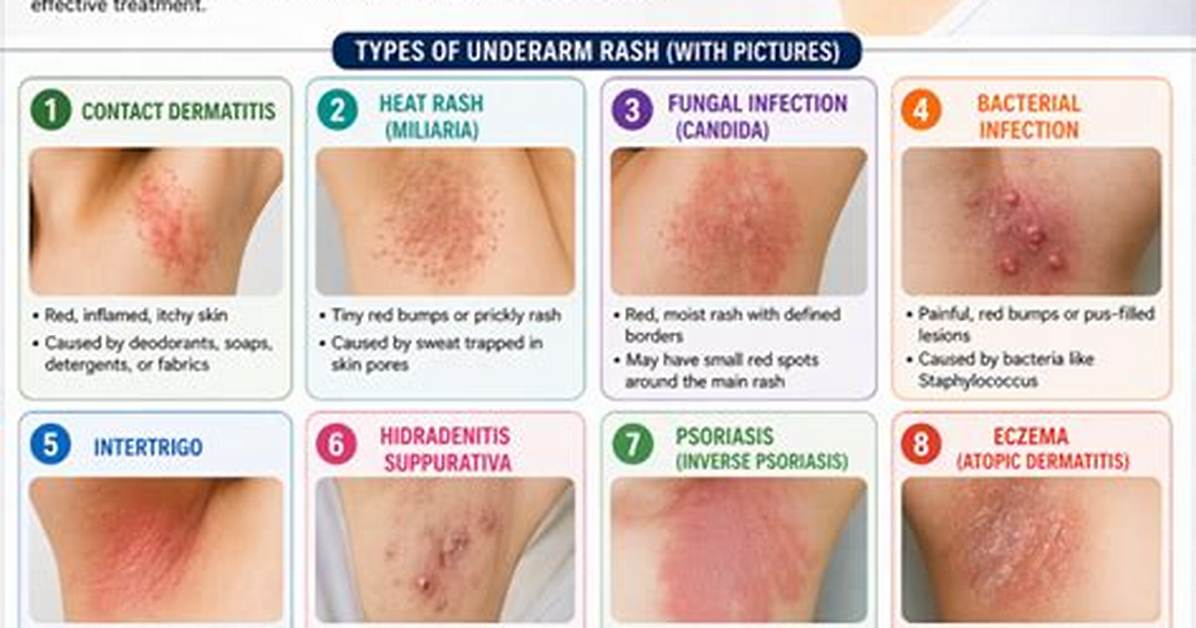
- An armpit rash is often caused by irritation from sweat, friction, soap, or dryness.
- It could also be an allergic reaction to fragrances or propylene glycol (a deodorant ingredient).
- Other causes of an armpit rash include a yeast infection, psoriasis, or seborrheic dermatitis.
Rashes are pesky patches of irritated skin that can affect any part of your body, including your armpits.
This story is available exclusively to Business Insider subscribers. Become an Insider and start reading now. Have an account? Log in.Typically, armpit rashes aren't dangerous, but they can certainly be uncomfortable and range from itchy to painful. If you're experiencing a persistent rash alongside other symptoms, it's best to see a doctor to figure out what's going on.
Here are six potential causes of armpit rashes and how to treat them.
1. Contact dermatitis
Armpit rashes can be due to either irritant contact dermatitis or allergic contact dermatitis.
Irritant contact dermatitis of the armpit results in a red, inflamed rash, caused by an external substance, says Dr. Christopher G. Bunick, a dermatologist at Yale Medicine and an associate professor of dermatology at Yale School of Medicine.
This occurs when some kind of substance irritates your skin, damaging its outermost layer. It is due to irritation, not an allergy.
Bunick says common causes of irritant contact dermatitis in the armpits include:
- Sweat
- Friction due to movement or clothing
- Skin dryness
- Low humidity
- Soaps
- Excessive washing
Allergic contact dermatitis also results in a red, inflamed rash. However, this rash occurs due to an allergy to something that's coming into contact with your skin, says Dr. Hyemin Pomerantz, a board-certified dermatologist at VivaSkin Dermatology and Aesthetics.
"Your skin can become allergic to a certain ingredient of a product. An allergic reaction can happen at any time –– even to the product you've been using for a long time," Pomerantz says.
Common offenders are fragrances in perfume or cologne or propylene glycol which is in some deodorants, says Pomerantz.
Other symptoms of irritant contact dermatitis include:
- Hyperpigmented patches of skin that may be leathery (most common in people of color)
- Scaly, cracked, and dry skin (most common in white people)
- Blisters that may ooze and crust over
- Burning
How to treat it: The key to treating this is to determine what is causing the irritation or allergy and then eliminate it, Bunick says.
Additionally, you can apply a topical steroid for a couple of weeks to soothe irritation and inflammation, he says. In more serious cases, your doctor might prescribe you non-steroidal anti-inflammatory topicals.
2. Folliculitis
Folliculitis occurs when your hair follicles are inflamed, typically due to bacteria. Since there are plenty of hair follicles in your armpits, it's a common place for the condition to occur. Bunick says the most frequent cause is a staphylococcus (staph) infection. Folliculitis will result in red papules, bumps, or even larger boils that can be painful. The rash can also be itchy.
How to treat it: Topical antibiotics are usually the first course of treatment. In more serious cases, Bunick says you might need to take oral antibiotics to clear up the bacterial infection.
It's also important to take measures to prevent it from happening again. Bunick says preventative measures include shaving with clean razors (if you shave your armpits) and using benzoyl peroxide washes to lessen the chances of bacteria infecting your underarm hair follicles.

