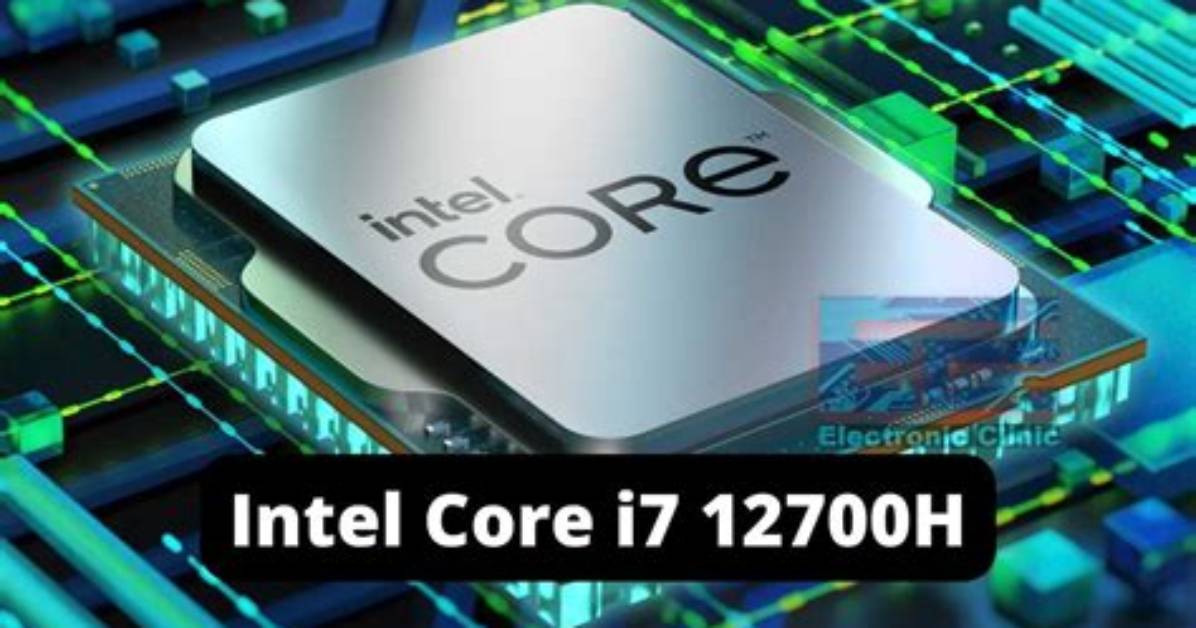
Two of the top laptop processors in 2022 are the Intel Core i7-12700H vs AMD Ryzen 6900HS, but with so many other factors impacting laptop performance, it’s hard to compare them head to head. So, when Lenovo offered me the opportunity to run the Intel version of its excellent Slim 7 Pro X laptop, which I had previously reviewed in its AMD incarnation, I jumped at the chance to pit two very similar laptops against each other.
I say “very similar” because, unfortunately, they’re not identical. Importantly, they both used the Nvidia GeForce RTX 3050 GPU, which means we’re directly comparing the CPUs themselves. The most important difference, beyond the processors, was that the AMD version running the Ryzen 9 6900HS CPU enjoyed 32GB of 6400MHz LPDDR5 RAM. The Intel Core i7-12700H version was loaded with “just” 16GB of slower 5200MHz LPDDR5 RAM. That means that while our benchmark results are likely to be close enough to gauge the performance differences, we can’t be truly scientific. And the Ryzen 9 6900HS is a lower-power version of that chip while the Core i7 is full-power.
Even so, the results were interesting, if not groundbreaking. They mainly demonstrated that the choice between Intel and AMD isn’t so clear-cut that performance alone can make the difference.
Specs
| Lenovo Slim 7 Pro X | Lenovo Slim 7i Pro X | |
| Dimensions | 12.92 inches x 8.72 inches x 0.63 inches | 12.92 inches x 8.72 inches x 0.63 inches |
| Weight | 3.2 pounds | 3.2 pounds |
| Processor | AMD Ryzen 9 6900HS | Intel Core i7-12700H |
| Graphics | Nvidia GeForce RTX 3050 | Nvidia GeForce RTX 3050 |
| RAM | 32GB 6400MHz LPDDR5 | 16GB 5200MHz LPDDR5 |
| Display | 14.5-inch 16:10 3K (3,072 x 1,920) IPS at 120Hz | 14.5-inch 16:10 3K (3,072 x 1,920) IPS at 120Hz |
| Storage | 1GB PCIe 4.0 SSD | 512GB PCIe 4.0 SSD |
| Touch | No | No |
| Ports | 2 x USB-C 3.2 Gen 2 2 x USB-A 3.2 Gen 1 1 x HDMI 2.0 1 x 3.5mm audio jack | 2 x USB-C with Thunderbolt 4 2 x USB-C 3.2 Gen 1 1 x HDMI 2.0 1 x 3.5mm audio jack |
| Wireless | Wi-Fi 6 and Bluetooth 5.1 | Wi-Fi 6E and Bluetooth 5.2 |
| Webcam | 1080p with IR camera for Windows 11 Hello | 1080p with IR camera for Windows 11 Hello |
| Operating system | Windows 11 | Windows 11 |
| Battery | 70 watt-hours | 70 watt-hours |
Performance is close, but no cigar
I reviewed the Slim 7 Pro X with an AMD Ryzen 9 6900HS, a 35-watt eight-core/16-thread CPU running at up to 4.9GHz. As mentioned above, the laptop was also equipped with 32GB of LPDDR5 RAM and a 1TB PCIe 4.0 SSD. The Slim 7i Pro X was equipped with a 45-watt Intel Core i7-12700H with 14 cores and 20 threads, running at up to 4.7GHz. It used 16GB of 5200MHz of LPDDR 5 RAM and a 512GB PCIe 4.0 SSD.
In our CPU-intensive benchmarks, the results were mixed. The AMD model was behind in Geekbench 5, both in single-core mode where we expect AMD to fall behind Intel and in multi-core where AMD can be expected to take the lead. The laptops scored close to the same in the PCMark 10 Complete benchmark that mixes up a variety of productivity and creative tasks.
In our Handbrake test that encodes a 420MB video as H.265, the Intel version was a few seconds faster but the difference wasn’t meaningful. Note that I tested in both balanced and performance modes using the same Lenovo Vantage utility, and the results are posted in the table. In Cinebench R23, the AMD version was slower in single-core and slightly faster in multi-core in balanced mode.
The bigger difference came in the Pugetbench Premiere Pro benchmark that runs in a live version of Adobe Premiere Pro. This benchmark stresses both the CPU and GPU, and the Slim 7 Pro X was a solid performer for a 14-inch laptop with an RTX 3050. It was at least 60% faster than laptops running Intel Iris Xe integrated graphics. The Intel version was faster, though. It scored about 31% faster in balanced mode, and its performance ratcheted up another 8% in performance mode. The AMD version wasn’t able to complete the benchmark in performance mode, so this makes the Intel version even faster.
The Pugetbench benchmark has several components, including Export, Playback, and GPU effects. The biggest difference between AMD and Intel versions came in the Playback score, where AMD scored 62.5 and Intel scored 122.5. Intel has several Adobe optimizations, and clearly, it optimized this set of tasks. Given the discrepancy in the amount and speed of RAM, Intel is the clear winner in this benchmark.
It’s safe to say that for CPU-intensive productivity and creative tasks, these two CPUs are similarly matched. That’s impressive given the AMD chip’s lower power rating. In Adobe apps, Intel has the lead. And with equal RAM, maybe the Intel chip pulls even further ahead.
| Lenovo Slim 7 Pro X (Ryzen 9 6900HS) | Lenovo Slim 7i Pro X (Core i7-12700H) | |
| Geekbench 5 (single / multi) | Bal: 1,493 / 8,914 Perf: 1,493 / 9,288 | Bal: 1,670 / 11,971 Perf: 1,730 / 12,356 |
| PCMark 10 Complete (higher is faster) | 6,493 | 6,322 |
| Handbrake (seconds) | Bal: 99 Perf: 86 | Bal: 90 Perf: 79 |
| Cinebench R23 (single / multi) | Bal: 1,552 / 12,139 Perf: 1,548 / 13,164 | Bal: 1,731 / 11,379 Perf: 1,791 / 13,276 |
| Pugetbench Premiere Pro (higher is faster) | Bal: 548 Perf: N/A | Bal: 716 Perf: 769 |
| 3dMark Time Spy | Bal: 4,057 Perf: 4,910 | Bal: 4,134 Perf: 5,008 |

